Camera Glasses vs. Action Cameras: Which Is Better for POV Video?
Action cams own the mount. Camera glasses own eye level. Here's an honest look at where each one wins, and when AI sports glasses replace your chest strap.
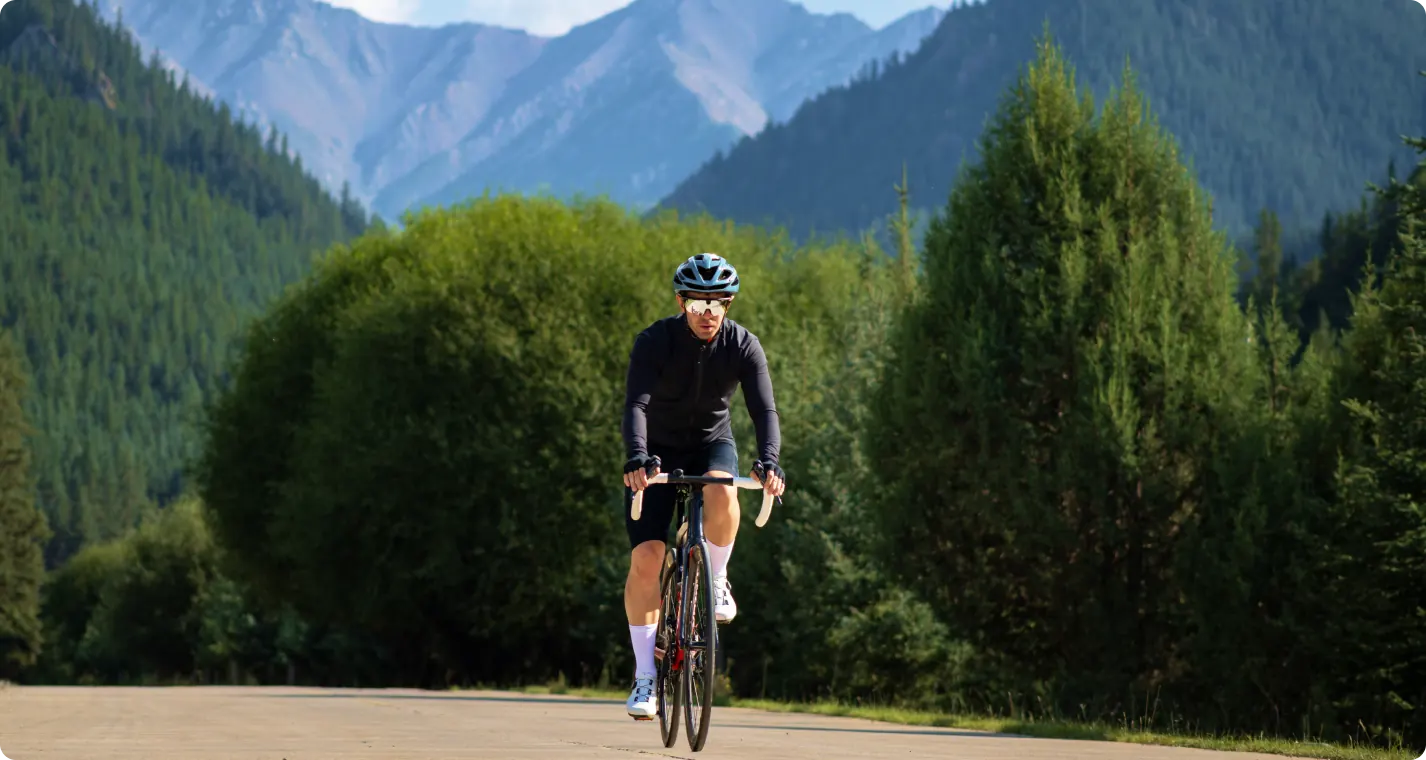
For a decade the answer to “how do I film my ride?” was simple: buy an action camera, then buy a mount. Camera glasses changed that. They put the lens at your eyes, so the footage shows what you actually saw, not what your chest or helmet was pointed at.
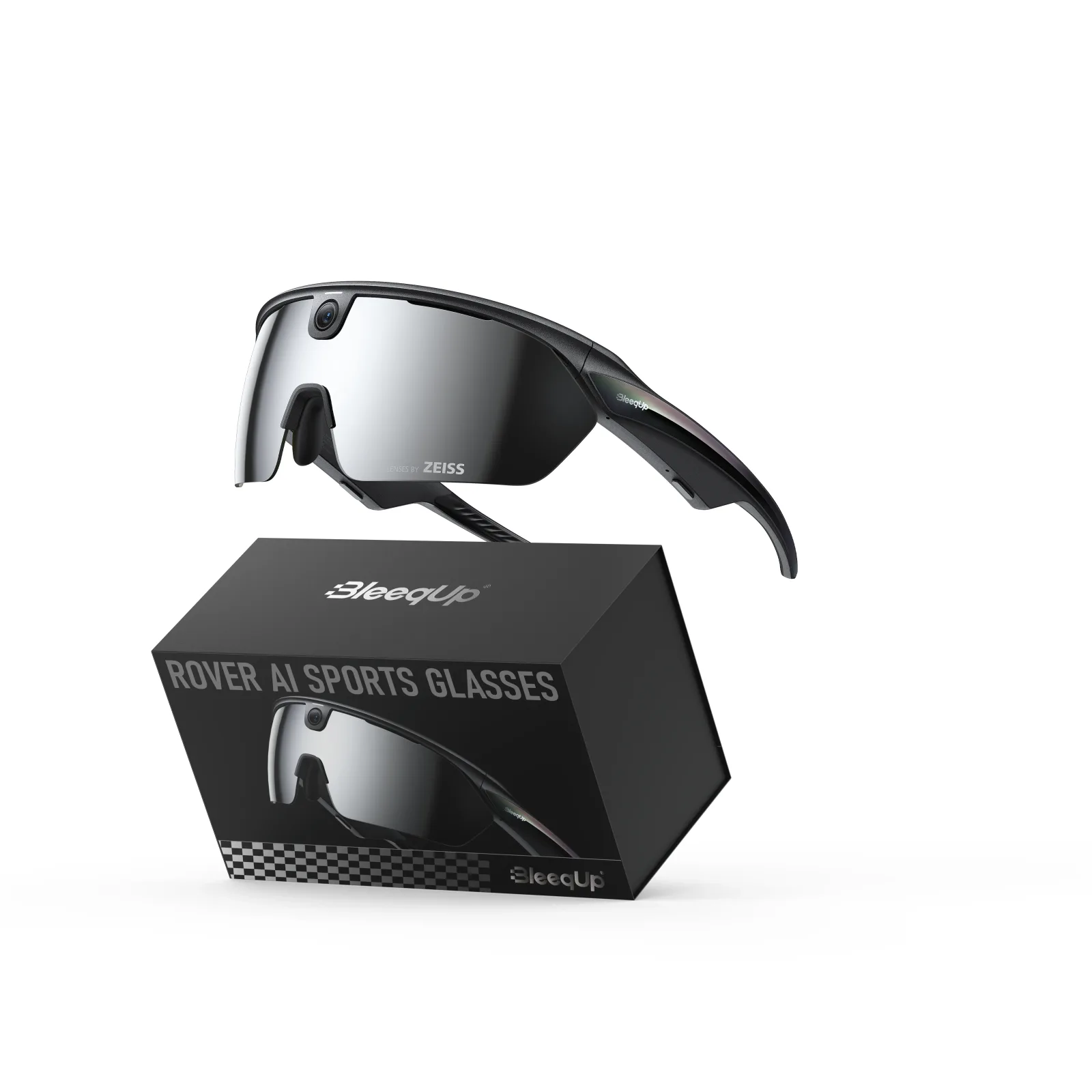
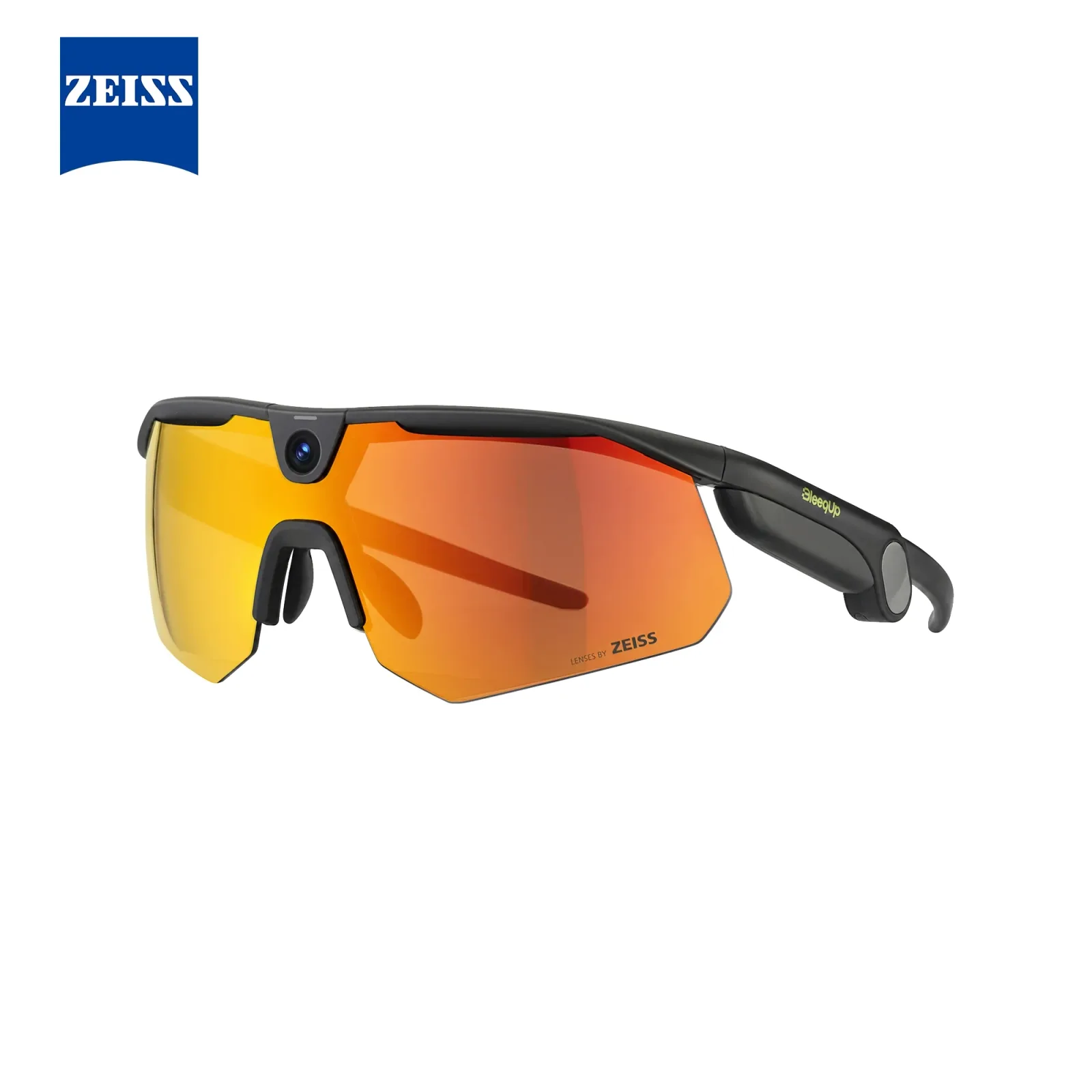
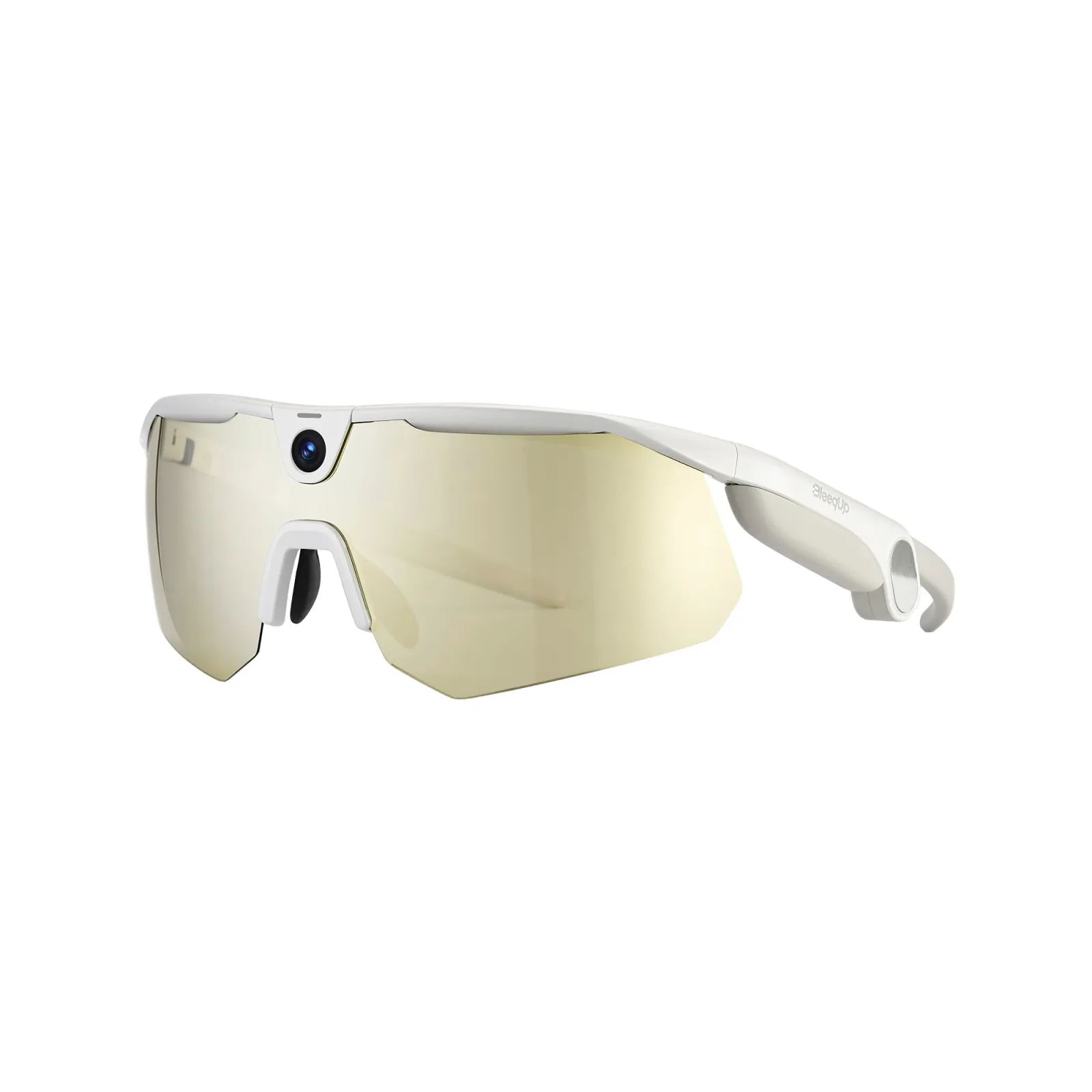
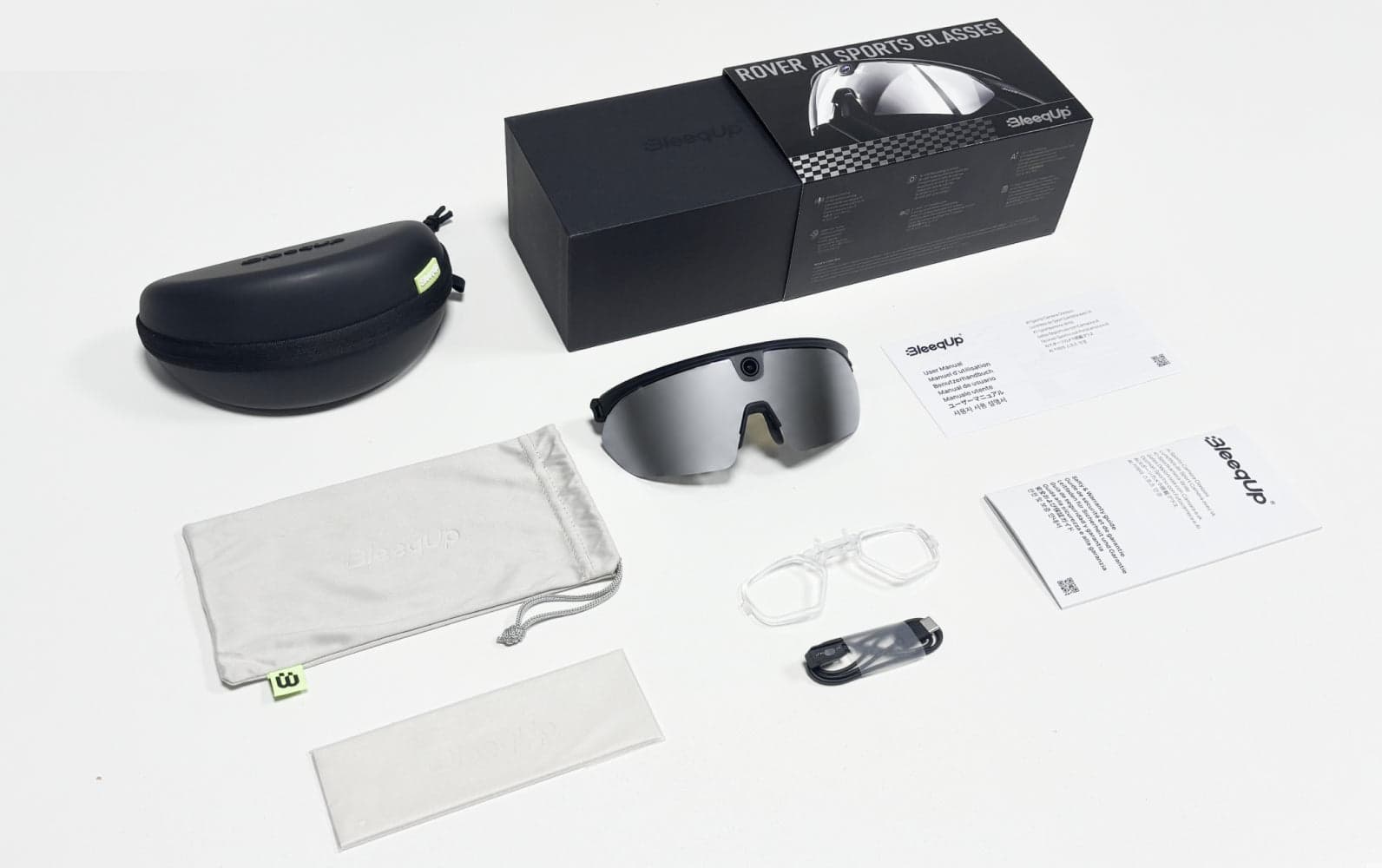
Neither format wins everywhere. Below is where each one is the better tool, using the BleeqUp Rover and BleeqUp Ranger as the camera-glasses benchmark.
Point of view: eye level vs. mounted
Shop this article
Prices in CAD. Free standard shipping over $500 CAD.
A chest mount films your handlebars. A helmet mount films where your head points, a few inches above your eyes. Camera glasses film from eye level with a 120° field of view, so when you glance at a switchback, a hold, or a defender, the camera glances too.
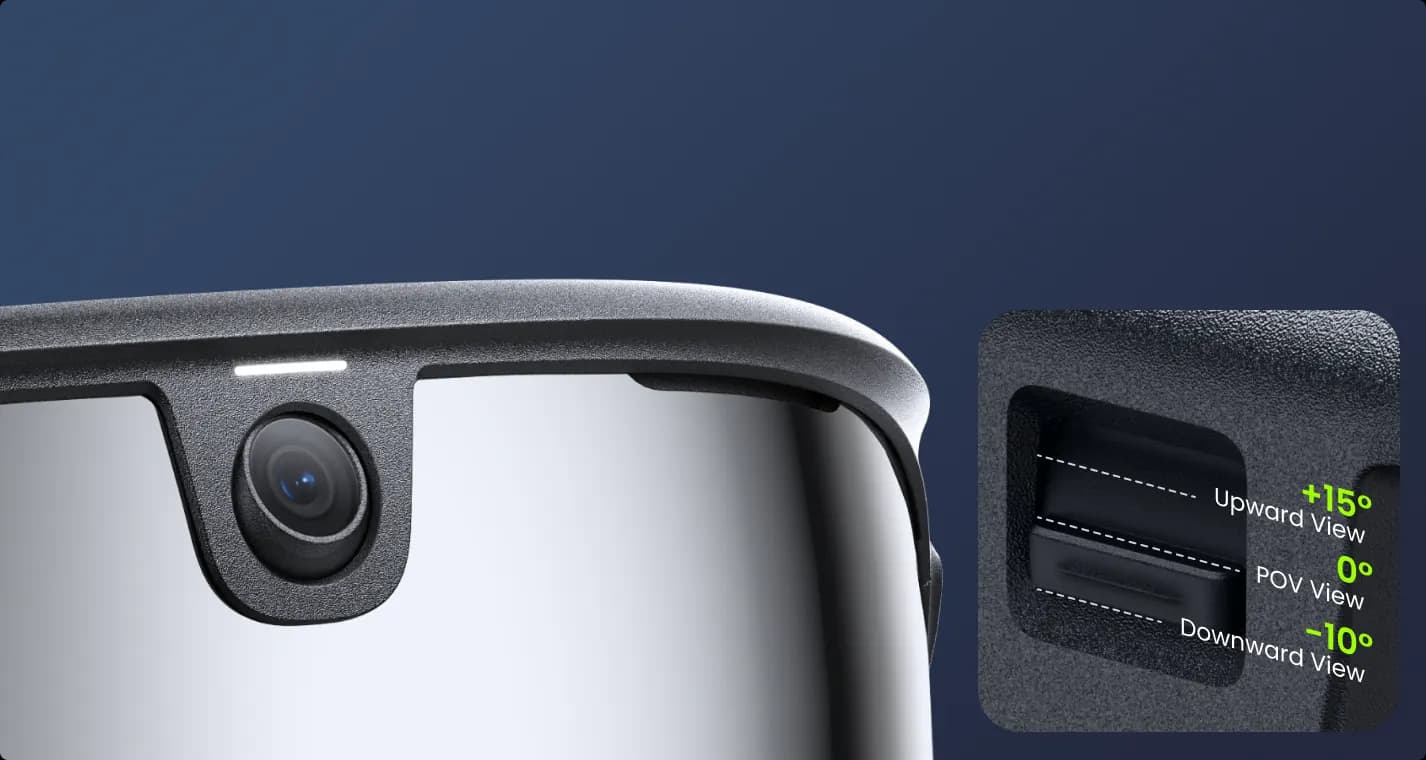
Rover adds a 3-level tilt camera (−10°, 0°, and 15°). Use −10° to keep a hat brim or helmet edge out of frame, 0° for everyday recording, and 15° when you ride in a tucked position looking down the road. That fixes the classic camera-glasses problem of filming the ground.
Image quality and stabilization
Both Rover and Ranger record up to 3K at 60fps with electronic image stabilization (EIS) and 16 MP stills. Rover adds real-time HDR video and a Super Night Mode for low light. Your head is a natural gimbal: your neck absorbs bumps before the lens does, which helps glasses footage feel smoother than a chest mount on rough terrain.
Where action cams still win: very high frame rates for slow motion, and ultra-wide lenses for dramatic follow shots.
Audio: hear the ride, record your voice
This is where glasses pull ahead. Rover has open-ear speakers, a 5-mic array, and wind noise reduction up to 35 km/h, so you can take calls, listen to music, and narrate without earbuds blocking traffic noise. Real-time walkie-talkie through the BleeqUp app lets a group ride talk hands-free. An action camera records sound, but it can't be your headphones.
Battery life
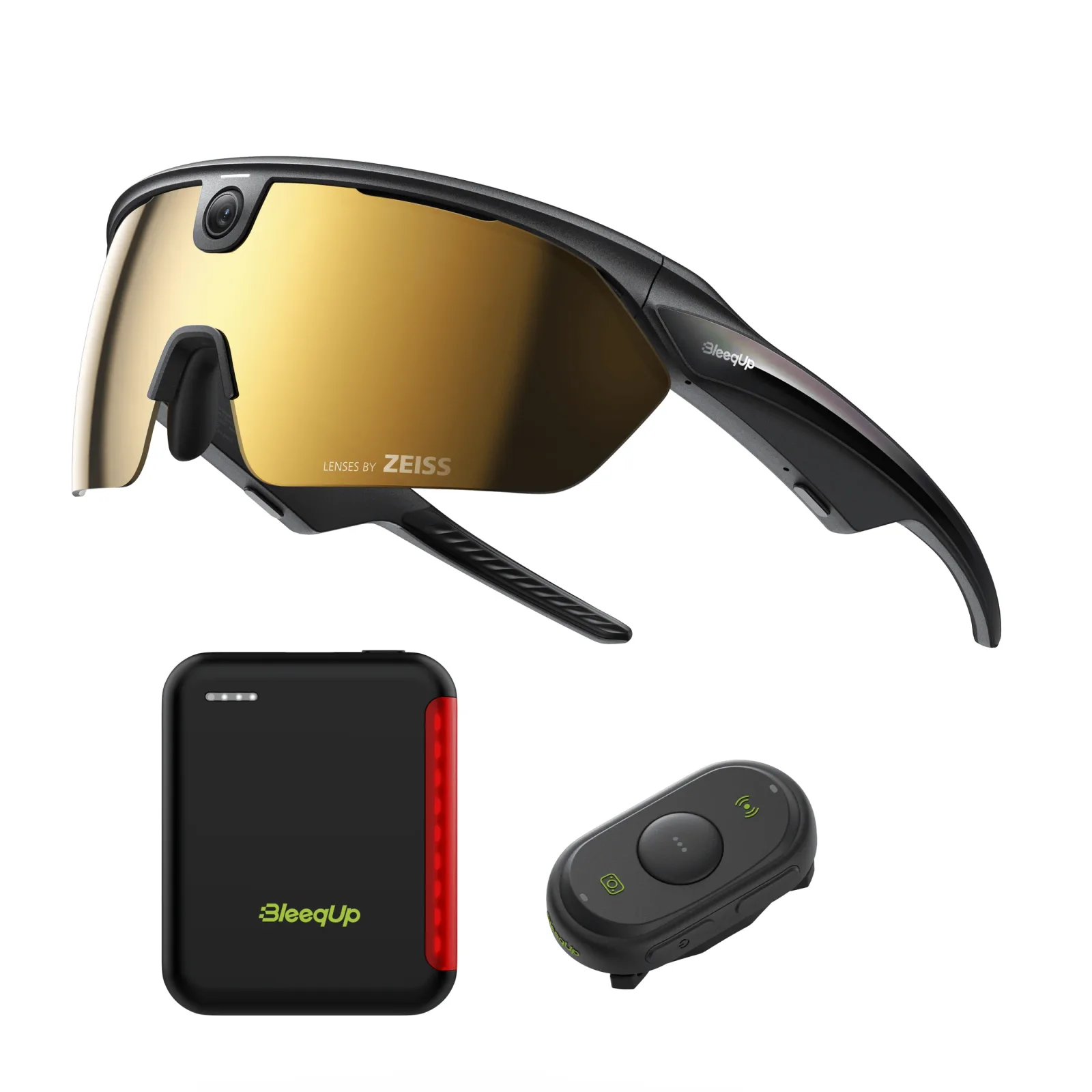
Rover records about 1 hour of video on its own battery and up to 8 hours of audio. Clip on Rover Power Plus and total recording time goes up to 5 hours, or up to 48 hours of audio. Loop recording keeps rolling by overwriting old footage when storage (64 GB on Rover, 32 GB on Ranger) fills up.
Durability and water
Rover is rated IP65 and Ranger IP54. Both handle rain, sweat, and dust. Neither is a swimming or diving camera. If you film underwater, surf, or need a camera that survives being dropped from height, an action camera in a housing is still the right tool.
Editing: where AI changes everything
Most action-cam footage never gets edited because scrubbing two hours of video is a chore. Rover's AI finds highlights automatically, lets you search clips by voice (“show me the descent”), and assembles a one-tap edit. AI Video Roadbook stitches your route and footage into a shareable story, and you can switch between 16:9 and 9:16 so clips are ready for Reels and TikTok without cropping.
Head-to-head summary
Camera glasses vs. action cameras by category
Category
Camera glasses (Rover / Ranger)
Action camera
Natural POV
Winner: eye level, 120° FOV
Depends on mount
Hands-free audio
Winner: open-ear speakers + mics
Recording only
Mount needed
None
Yes
Underwater
No
Winner
Slow motion
Up to 60fps
Winner
Auto editing
Winner: on-device AI highlights + search
App-dependent
Sun and eye protection
Winner: UV400 lenses (ZEISS options)
None
So which should you buy?
Cyclists, runners, hikers, skiers, and riders: camera glasses. You get the camera, the headphones, and the sunglasses you were going to wear anyway. See our cycling smart glasses guide.
Surfers, divers, and stunt filmers: an action camera.
Content creators: both. Glasses for the authentic POV and voice, action cam for the B-roll.
Choosing between BleeqUp models? Rover vs. Ranger lays out every spec difference.
Frequently asked questions
Are camera glasses better than a GoPro?+
For natural eye-level POV, hands-free audio, and no mounts, yes. For underwater filming, high-frame-rate slow motion, and mounted angles, an action camera is still better.
What video quality do BleeqUp camera glasses record?+
Both Rover and Ranger record 1080p and 3K at 30 or 60fps with EIS, plus 16 MP (4656 × 3496) photos. Rover adds real-time HDR and night mode.
Can camera glasses get wet?+
Rover is IP65 and Ranger is IP54, so both handle rain, sweat, and dust. Neither is designed for swimming or submersion.
How long do camera glasses record?+
Rover records about 1 hour of video on its built-in battery, up to 5 hours total with Rover Power Plus. Loop recording keeps capturing when storage fills.